Embarking on a flooring upgrade? This guide simplifies the process, addressing common anxieties about installation. From subfloor prep to final checks, we’ll cover each step thoroughly.
Yellow Tongue flooring represents a popular and reliable choice for subflooring, particularly favored in Australia and New Zealand. It’s a brand name, synonymous with high-quality particleboard flooring designed to provide a stable and level surface for your final floor covering – be it tiles, carpet, or hardwood. This guide focuses on the installation process, ensuring a successful outcome for your home improvement project.
Often selected for its cost-effectiveness and ease of installation compared to traditional plywood, Yellow Tongue offers excellent structural performance. However, proper installation is crucial to unlock its full potential. Ignoring preparation steps or deviating from recommended practices can lead to issues like squeaking, unevenness, or even flooring failure.

This guide will walk you through each stage, from assessing your existing subfloor to the final inspection. We’ll delve into the specifics of leveling, moisture control, and secure fixing techniques, referencing AS 1860.2 standards where applicable. Whether you’re a seasoned DIY enthusiast or a first-time installer, this resource aims to provide clear, concise instructions for a durable and beautiful flooring foundation.
Understanding Yellow Tongue Properties
Yellow Tongue flooring, a type of particleboard, possesses distinct properties vital for successful installation. It’s engineered for strength and stability, offering a consistent surface for various floor finishes. Unlike traditional timber, Yellow Tongue is manufactured to specific densities and dimensions, minimizing warping and inconsistencies.
A key characteristic is its tongue-and-groove edge profile, facilitating a tight, interlocking fit between boards. This contributes significantly to the overall rigidity of the subfloor. However, this also means precise alignment during installation is paramount. The material is susceptible to moisture damage, making moisture content checks and proper acclimation essential before, during, and after installation.
Understanding its composition – wood particles bonded with resin – informs best practices. While durable, it’s not impervious to impact. Therefore, adequate joist spacing and secure fixing are crucial. Yellow Tongue’s performance aligns with AS 1860.2 standards, outlining specific requirements for load-bearing capacity and dimensional stability. Recognizing these properties ensures a long-lasting, reliable subfloor.
Tools and Materials Required
Successful Yellow Tongue flooring installation demands a specific toolkit and material list. Essential tools include a circular saw for accurate cutting, a jigsaw for intricate shapes, and a measuring tape for precise dimensions. A string line and level are crucial for establishing a straight and even base.
Fastening requires either a screw gun with appropriate screws or a nail gun with suitable nails – selection depends on joist material and preference. A moisture meter is non-negotiable for verifying acceptable moisture content. Sandpaper or a self-leveling compound may be needed for subfloor preparation. Don’t forget safety gear: safety glasses, dust mask, and work gloves are vital.
Materials beyond the Yellow Tongue boards themselves include joining strips for particleboard flooring, if applicable, and potentially adhesive for securing these strips. Spacers are needed to maintain expansion gaps around the perimeter. Finally, ensure you have sufficient wood glue for tongue-and-groove joints, enhancing their strength and preventing squeaks. Having everything prepared beforehand streamlines the process.
Subfloor Preparation: Assessing Existing Conditions
Before laying Yellow Tongue, a thorough subfloor assessment is paramount. Most existing subfloors aren’t perfectly flat; expect bumps, depressions, and inconsistencies, particularly around plywood knots or seams. Carefully inspect for loose boards, protruding nails or screws, and any signs of water damage or rot. Address these issues immediately – repair or replace damaged sections.
Check for existing flooring remnants; these must be completely removed. Ensure the subfloor is structurally sound and capable of supporting the added weight of the Yellow Tongue and the final flooring. Look for any springiness or excessive deflection, indicating potential joist issues. A stable subfloor is the foundation for a successful installation.
Document any significant imperfections with photos or notes. This will inform your leveling strategy. Remember, a properly prepared subfloor minimizes squeaks, ensures a level surface, and extends the lifespan of your new flooring. Ignoring this step can lead to costly problems down the line.
Subfloor Leveling: Sanding vs. Self-Leveling Compound
Once imperfections are identified, leveling the subfloor is crucial. Two primary methods exist: sanding and using self-leveling compound. Sanding is effective for minor irregularities – high spots can be reduced, and low areas slightly built up. However, it’s dusty, time-consuming, and less suitable for significant dips or widespread unevenness.
Self-leveling compound (SLC) offers a more robust solution for larger discrepancies. It’s a cement-based mixture that flows to create a perfectly level surface. SLC is generally preferred when dealing with substantial variations in the subfloor. However, it requires careful preparation, including priming, and has a specific working time.
The choice depends on the severity of the unevenness. Some installers recommend sanding Yellow Tongue directly, but this is only viable for very minor imperfections. Discussing the best approach with a flooring professional is advisable, considering your specific subfloor conditions and budget. Proper leveling ensures a stable and quiet floor.
Moisture Content Check & Acclimation
Before installation, verifying the moisture content of both the Yellow Tongue flooring and the subfloor is paramount. Excessive moisture can lead to warping, buckling, and ultimately, flooring failure. A reliable moisture meter should be used to assess both surfaces, ensuring they fall within the manufacturer’s recommended range – typically below 12-13%.
Acclimation is the process of allowing the Yellow Tongue boards to adjust to the room’s temperature and humidity. This is achieved by storing the unopened boards in the installation environment for a specified period, usually 48-72 hours, or as directed by the manufacturer.
Proper acclimation minimizes expansion or contraction after installation. Even a local hardwood flooring installer confirmed that ensuring the Yellow Tongue is properly acclimated is key. Failing to do so can compromise the integrity of the entire flooring system, leading to costly repairs down the line. Prioritize this step!
Platform Installation Method Overview
The platform installation method for Yellow Tongue flooring involves creating a fully supported subfloor system, independent of the existing joists in some areas. This is particularly beneficial when dealing with uneven or damaged joists, or when seeking to improve floor rigidity and reduce bounce. It essentially builds a new, level ‘platform’ upon which the final flooring will be installed.
This method typically utilizes bearers – timber supports – laid across the existing joists, creating a level base. Yellow Tongue boards are then fixed directly to these bearers. A string line to the floor extremity is crucial for ensuring straight lines during installation.
The platform approach offers enhanced stability and allows for easier leveling, especially when combined with self-leveling compounds for minor imperfections. It’s a robust solution, often preferred for larger spans or areas requiring significant subfloor correction. Careful planning and accurate measurements are vital for a successful platform installation.
Laying the First Row of Yellow Tongue
Starting with the first row of Yellow Tongue is critical for a successful installation. Begin along the longest, straightest wall in the room, leaving a consistent expansion gap – typically around 10-15mm – against the wall. This gap accommodates natural expansion and contraction of the boards due to moisture and temperature changes.
Ensure the tongue side of the first board faces away from the wall, allowing for the groove of the next board to connect. Carefully align the board, checking for levelness using a spirit level. Precise alignment here sets the foundation for subsequent rows.

Secure the first board using appropriate screws or nails (discussed later), ensuring they are driven straight and flush with the surface. Pay close attention to the board’s orientation; proper alignment with the joists or bearers is essential for maximum support and stability. A well-laid first row is the cornerstone of a solid Yellow Tongue floor.
Joining Yellow Tongue Boards: Tongue and Groove Technique
The tongue and groove system is fundamental to Yellow Tongue flooring’s stability and seamless appearance. Carefully align the groove of one board with the tongue of the adjacent board, ensuring a snug fit. Avoid forcing the boards together, as this can damage the delicate tongue or groove.
A tapping block and mallet are essential tools for this process. Position the tapping block against the board’s edge and gently tap with the mallet to engage the tongue and groove. Work your way along the joint, applying even pressure to avoid gaps or misalignment.

Inspect the joint after each connection. A properly joined board will lie flush with its neighbor, without any visible gaps or raised edges. If resistance is encountered, check for obstructions or slight damage to the tongue or groove. Precise joining is crucial for a structurally sound and aesthetically pleasing floor.
Staggering Joints for Stability
To maximize the structural integrity of your Yellow Tongue floor, employing a staggered joint pattern is paramount. Avoid aligning end joints in adjacent rows; instead, initiate each new row with a portion of a board, creating an offset. This technique distributes load more evenly across the subfloor, minimizing the risk of concentrated stress and potential movement.

A minimum offset of 200mm (approximately 8 inches) is generally recommended, though larger offsets provide even greater stability. This prevents the formation of continuous weak points that could compromise the floor’s performance over time. Consider the board lengths when planning your layout to achieve optimal staggering.
Staggering also enhances the floor’s resistance to warping or buckling caused by changes in temperature and humidity. By breaking up the continuous lines of joints, you create a more robust and durable flooring system, ensuring long-lasting performance and peace of mind.
Fixing Yellow Tongue to Joists: Screw or Nail Selection

Securely fastening Yellow Tongue flooring to the joists is crucial for a stable and quiet floor. Both screws and nails are viable options, but screws generally offer superior holding power and reduce the likelihood of squeaks developing over time. When choosing screws, opt for those specifically designed for subfloor applications – typically coated for corrosion resistance.
Nails, if used, should be ring-shank nails to provide enhanced grip. Avoid using smooth-shank nails, as they are prone to loosening. The fastener length should be sufficient to penetrate at least two-thirds of the joist’s depth, ensuring a solid connection. Consider the joist material; hardwood joists may require pre-drilling to prevent splitting.
Screws allow for easier adjustments during installation and provide a tighter bond, minimizing movement. Regardless of your choice, consistent and accurate fastening is key to a long-lasting, high-performance floor.
Screw/Nail Spacing and Installation Guidelines
Proper spacing of fasteners is paramount for a robust Yellow Tongue flooring installation. Generally, screws or nails should be spaced approximately 300mm (12 inches) along the edges of the boards and 400mm (16 inches) in the field – meaning the central area of the board. However, always consult the manufacturer’s specific recommendations, as these can vary.
When installing, ensure fasteners are driven in straight and flush with the surface, avoiding overdriving which can damage the board. Countersinking is not typically required. Start by securing the first row meticulously, as this establishes the foundation for subsequent rows. Maintain consistent spacing throughout the entire installation process.
For optimal results, stagger the fastener pattern slightly to distribute the load evenly. Pay close attention to areas near walls and doorways, potentially reducing spacing for added support. Following these guidelines will contribute to a quiet, stable, and durable floor.
Addressing Perimeter Gaps and Expansion
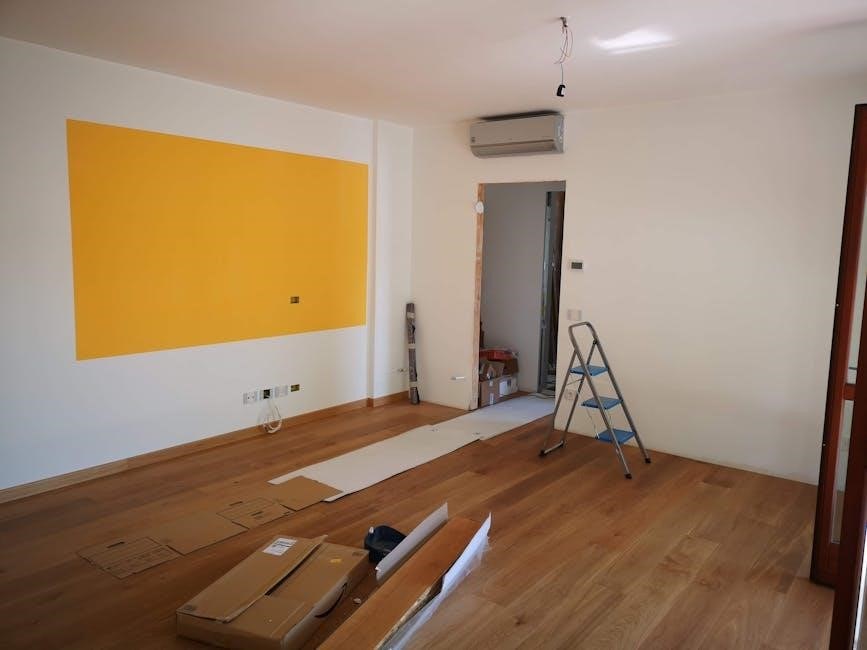
Yellow Tongue, like all wood-based flooring, is susceptible to expansion and contraction with changes in humidity and temperature. Therefore, leaving an adequate perimeter gap is crucial during installation. A gap of approximately 10-15mm (3/8 – 1/2 inch) should be maintained around the entire perimeter of the room, including along walls, pipes, and other fixed objects;
This gap allows the flooring to expand without buckling or causing stress on the structure. It’s essential not to fill this gap with sealant or grout during the initial installation. The gap will later be covered by skirting boards or other finishing trims.
For larger installations, consider expansion breaks in the flooring layout to further mitigate potential movement. Ignoring these expansion needs can lead to costly repairs down the line. Proper gap management ensures a long-lasting and trouble-free flooring system.
Using Joining Strips for Particleboard Flooring
When installing particleboard flooring, specifically Yellow Tongue, utilizing joining strips is vital for creating a robust and stable subfloor. These strips are particularly important at the edges of the flooring where it meets walls or other fixed structures, and also for joining boards along their length.
Joining strips provide additional support and prevent edge chipping or crumbling, common issues with particleboard. They effectively bridge gaps and distribute loads, enhancing the overall structural integrity. Ensure the joining strips are specifically designed for particleboard flooring and are installed flush with the surface of the boards.

Refer to AS 1860.2 installation standards for precise guidance on strip selection and placement. Correctly applied joining strips contribute significantly to a quiet, durable, and long-lasting floor. They are a small investment that yields substantial benefits in terms of performance and longevity.
Adhering to AS 1860.2 Installation Standards
Successful Yellow Tongue flooring installation hinges on strict adherence to Australian Standard AS 1860.2, governing particleboard flooring installation. This standard details crucial aspects, from subfloor preparation and moisture content limits to fixing schedules and jointing procedures. Ignoring these guidelines can void warranties and compromise the floor’s structural integrity.

AS 1860.2 specifies acceptable tolerances for subfloor flatness and defines appropriate methods for leveling, whether through sanding or self-leveling compounds. It also dictates the correct spacing for screws or nails, ensuring adequate fixing to joists; Detailed instructions regarding tongue and groove joining techniques, including the use of joining strips, are also provided.
Consult the standard directly or engage a qualified installer familiar with its requirements. Proper implementation of AS 1860.2 guarantees a compliant, durable, and safe flooring system. It’s a foundational element for a long-lasting and trouble-free Yellow Tongue installation.
Final Inspection and Preparation for Final Flooring
Before laying your final flooring surface, a meticulous final inspection of the Yellow Tongue subfloor is paramount. Thoroughly check all fixings – screws or nails – ensuring they are correctly seated and haven’t damaged the board edges. Address any protruding fixings immediately to prevent future issues.
Verify that all joints are tightly closed and secure, with no gaps or movement. Any inconsistencies can telegraph through to the finished floor. Sweep and vacuum the entire surface meticulously, removing all debris, dust, and leftover materials. A clean surface is crucial for optimal adhesion of the final flooring.
Confirm the subfloor remains dry and within acceptable moisture content levels. Finally, assess the overall flatness and stability. Correct any minor imperfections before proceeding. Proper preparation at this stage guarantees a flawless and long-lasting final flooring installation.