Guide to Apple Tree Identification
Unlocking the secrets of your orchard’s heritage requires diligent investigation, leveraging both historical records and modern techniques to pinpoint apple varieties accurately.
Identifying apple tree varieties can be a fascinating, yet complex endeavor. Many older orchards contain trees planted generations ago, with varieties lost to modern commerce; Determining these “lost” apples connects us to agricultural history and preserves valuable genetic diversity. This guide explores methods ranging from careful observation of fruit and tree characteristics to utilizing historic databases and, increasingly, genetic testing.
Successful identification often involves a multi-faceted approach. Relying solely on one characteristic – like color – is insufficient, as many varieties share similar traits. Collaborative projects, such as the Montezuma Orchard Restoration Project and state-level “Lost Apple” initiatives, demonstrate the power of combining local knowledge with scientific resources like the USDA-ARS National Plant Germplasm System. Understanding the historical context is crucial, as is recognizing the limitations of relying on memory or anecdotal evidence.
Why Identify Your Apple Tree?
Knowing your apple variety unlocks a wealth of information and potential benefits. Identification allows for informed horticultural practices – understanding disease susceptibility, pollination requirements, and expected growth habits. It also connects you to the tree’s history; discovering a “lost” apple is preserving a piece of local agricultural heritage. Furthermore, accurate identification is vital for propagation, ensuring you maintain the desired characteristics when grafting or rooting cuttings.
Beyond practical considerations, identification fosters a deeper appreciation for the diversity within apples. Knowing the origin and story of your tree adds a unique dimension to your orchard or garden. Resources like local agricultural extension offices and online databases can aid in this process, though definitive answers sometimes require expert consultation or even genetic testing. Ultimately, identifying your apple tree is an investment in its future and a celebration of its past.
Historical Context of Apple Identification
Apple identification wasn’t always straightforward; pre-modern orchards often contained seedlings, resulting in unique, unnamed varieties. Early pomologists relied heavily on descriptive characteristics, meticulously documenting fruit and tree features. However, names were often localized and inconsistent, leading to confusion and synonymy. The Montezuma Orchard Restoration Project exemplifies current efforts to reclaim this lost history, comparing local apples to known cultivars within the USDA-ARS National Plant Germplasm System.
This historical ambiguity spurred initiatives like “Lost Apple” projects, aiming to rediscover and name forgotten varieties. These projects often collaborate with institutions like Washington State University and the Temperate Orchard Conservancy, utilizing established collections as reference points. Understanding this historical context is crucial, as many older orchards represent a snapshot of pre-industrial apple diversity, a valuable resource for breeding and preservation.
Utilizing Historic Cultivar Databases
Accessing and interpreting historic cultivar databases is paramount for accurate apple identification. The USDA-ARS National Plant Germplasm System Apple Collection serves as a foundational resource, housing descriptions and, increasingly, genetic data for numerous varieties. These databases often contain detailed historical records, including origin stories, usage patterns, and distinguishing characteristics. However, navigating these resources requires understanding the limitations of historical documentation – descriptions can be subjective and names inconsistent.
Complementary databases maintained by institutions like Washington State University and the Temperate Orchard Conservancy offer valuable regional perspectives. The Montezuma Orchard Restoration Project actively utilizes these collections as standards for comparison. Successful identification often involves cross-referencing information from multiple sources, combining descriptive data with genetic analysis where available, to build a robust case for a particular variety.
The Role of the USDA-ARS National Plant Germplasm System
The USDA-ARS National Plant Germplasm System (NPGS) is a cornerstone of apple variety identification efforts. This system maintains a vast collection of apple germplasm, acting as a central repository for genetic resources. It provides access to documented cultivars, serving as crucial reference points for comparing unknown apples. Researchers and enthusiasts utilize the NPGS to access detailed descriptions, historical data, and increasingly, genetic profiles of established varieties.
The NPGS facilitates collaborative projects like the Montezuma Orchard Restoration Project, which relies on its collection for standardization. Leaf tissue analysis, comparing genetic markers, helps determine the identity of historically significant, yet currently unidentified, apple trees. Accessing the NPGS database is vital for anyone undertaking serious apple identification, offering a scientifically grounded approach to unraveling orchard mysteries.
State-Level “Lost Apple” Projects
Across the nation, numerous state-level initiatives, often termed “Lost Apple” projects, are dedicated to rediscovering and identifying heritage apple varieties. These grassroots efforts tap into local knowledge and historical records to locate old orchards and forgotten cultivars. They frequently collaborate with organizations like the USDA-ARS NPGS and university research centers to leverage scientific resources.
These projects often rely on community involvement, seeking assistance from landowners and local experts. A Reddit user highlighted their state’s “Lost Apple Project” offering identification services. These initiatives are invaluable for preserving agricultural heritage and understanding regional apple diversity. They provide a practical avenue for identifying mystery apples in backyards and abandoned orchards, contributing to a broader understanding of apple history.
Identifying Apples Through Fruit Characteristics
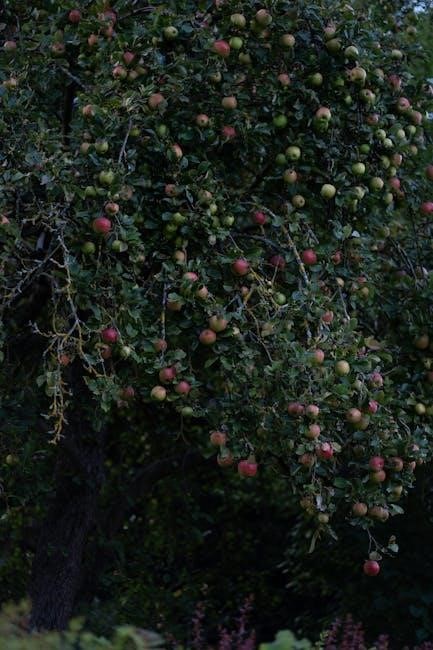
Careful observation of an apple’s shape, size, color, markings, stem, flesh texture, and taste provides crucial clues for narrowing down potential varieties.
Apple Shape and Size
Determining apple shape and size is a foundational step in identification. Apples aren’t uniformly round; they can be conical, oblong, flattened, or even ribbed. Consider whether the fruit is symmetrical or irregular. Size varies dramatically between cultivars, ranging from small crabapples, barely an inch in diameter, to large dessert apples exceeding four inches.
Documenting the average diameter and weight of several apples from the tree is helpful. Note if one end tapers significantly, creating a distinct conical shape, as seen in varieties like the ‘Newtown Pippin’. A flattened shape is common in some heirlooms.
Comparing your apple’s dimensions to descriptions in cultivar databases, or against known standards within “lost apple” projects, will significantly refine your search. Remember that growing conditions can influence size, but shape remains a relatively consistent characteristic.
Apple Color and Markings
Apple color is a crucial identifying feature, but it’s more complex than simply “red” or “green.” Base colors can range from pale yellow and green to deep crimson and even purple. Observe the presence and extent of blush – a rosy or reddish overlay – and whether it’s present on a significant portion of the fruit.
Pay close attention to markings like stripes, russeting (a rough, brownish texture), and lenticels (small, corky spots). Striping patterns can be distinct, varying in width, color, and coverage. Russeting can be partial or complete, and its texture differs between varieties.
Document the overall color distribution and any unique markings. These details, combined with shape and size, narrow down potential matches within apple cultivar databases and historical records, aiding accurate identification.
Stem Characteristics
The apple stem, or pedicel, offers valuable clues for identification, extending beyond simple length measurements. Note the stem’s thickness – is it slender or robust? Observe its color; stems can range from green to reddish-brown, sometimes with a waxy coating. Examine the cavity where the stem attaches to the fruit; is it deep, shallow, or symmetrical?
Crucially, assess the presence and characteristics of any russeting or markings on the stem itself. Some varieties exhibit distinctive stem coloration or texture. Also, consider the ease with which the fruit separates from the stem – does it come off cleanly, or with a noticeable effort?
Detailed stem observations, alongside fruit characteristics, contribute significantly to accurate apple variety determination, especially when utilizing identification keys.
Flesh Texture and Taste
Evaluating the flesh texture and taste is a subjective, yet crucial, step in apple identification. Is the flesh crisp, firm, soft, or mealy? Does it bruise easily? Note the color of the flesh – is it creamy white, yellowish, or prone to browning when exposed to air? Observe the size and distribution of the core.
Regarding taste, consider the balance of sweetness and acidity. Is the apple tart, sweet, or subtly flavored? Are there any distinct aromatic notes – hints of honey, spice, or berries? Record these impressions carefully, as taste profiles can be remarkably specific to certain varieties.
Remember that taste can vary based on growing conditions, but consistent characteristics aid in narrowing down possibilities.
Identifying Apples Through Tree Characteristics
Tree characteristics, encompassing leaf shape, branching patterns, bark texture, and bud appearance, provide vital clues for accurate apple variety determination.
Leaf Morphology (Shape, Size, Serrations)
Detailed examination of apple tree leaves offers significant clues for identification. Leaf shape varies considerably – some are ovate, elliptical, or even nearly round. Size is also a key differentiator, ranging from relatively small leaves to those considerably larger. Careful measurement is crucial.
Pay close attention to the leaf margins; are they finely serrated (saw-toothed), coarsely serrated, or smooth? The depth and spacing of the serrations are important details. Leaf color can also provide hints, though this is less reliable due to environmental factors. Observing the leaf’s surface – whether it’s smooth, pubescent (hairy), or glossy – adds another layer of information.
Comparing these characteristics against descriptions in apple identification guides or databases is essential. Remember that leaf morphology can sometimes vary slightly even within the same variety, so consider multiple leaves from different parts of the tree for a more accurate assessment.
Branching Patterns and Growth Habit
Observing how an apple tree branches and grows provides valuable identification insights. Is the tree upright and vigorous, spreading and weeping, or somewhere in between? Note the angle at which branches emerge from the trunk – are they more horizontal or vertical? Branch thickness and color also contribute to the overall picture.

Consider the tree’s overall shape and density. Some varieties naturally form a pyramidal shape, while others are more rounded or irregular. The presence of spurs – short, stubby branches that bear fruit – is another important characteristic.
Growth habit can be influenced by grafting and pruning, but inherent tendencies remain. Documenting these patterns, alongside other characteristics, helps narrow down potential varieties. Comparing these observations with descriptions from heritage orchard projects and cultivar databases is a crucial step in the identification process.
Bark Characteristics
Apple tree bark offers subtle yet significant clues for variety identification. Examine the bark’s color – ranging from grayish-brown to reddish-brown – and texture. Is it smooth, rough, furrowed, or scaly? Note the pattern of the ridges and furrows; are they deep and prominent, or shallow and irregular?
Lenticels, small, corky pores on the bark’s surface, vary in size, shape, and abundance depending on the cultivar. Observe whether the bark peels in plates or strips; Older trees will naturally exhibit more variation in bark characteristics due to age and environmental factors.
Documenting these details, alongside branching patterns and leaf morphology, builds a comprehensive profile. Comparing your observations with descriptions from historical databases and expert consultations will aid in accurate identification, especially within “lost apple” projects focused on heritage varieties.
Bud Characteristics
Apple tree buds provide valuable identification clues, particularly during dormancy. Observe the bud’s shape – conical, rounded, or pointed – and size. Note the color of the bud scales, ranging from brown to reddish-brown, and their texture: are they fuzzy, smooth, or glossy?
Examine the arrangement of the buds on the twigs – alternate or clustered. The presence and length of bud scales are also important characteristics. Some varieties exhibit appressed scales, while others have spreading scales.
Carefully dissect a bud (if possible) to observe the flower bud structure. This can reveal subtle differences between varieties. Documenting these details, alongside bark and leaf characteristics, contributes to a comprehensive identification profile, assisting in matching trees to historical cultivar databases and expert assessments.

Advanced Identification Techniques
Genetic testing, expert consultation, and utilizing specialized identification keys offer definitive apple variety confirmation, supplementing traditional methods for accurate orchard heritage discovery.
Genetic Testing for Apple Varieties
Modern advancements in genetic analysis provide a powerful tool for apple variety identification, offering a level of precision unmatched by traditional methods. This process involves extracting DNA from apple leaf tissue and comparing it to established genetic profiles within databases like the USDA-ARS National Plant Germplasm System.
The Montana Heritage Fruit Identification Guide specifically highlights the use of genetic testing to identify commonly planted trees surviving in heritage orchards, ensuring accuracy in their identification key. While historically challenging and expensive, genetic testing is becoming increasingly accessible and affordable for both researchers and dedicated orchardists.
Results can definitively confirm a variety or reveal unexpected genetic mixtures, particularly in older orchards where grafting and cross-pollination have occurred over time. This technique is invaluable when fruit and tree characteristics are ambiguous or when dealing with potentially “lost” apple cultivars, aiding restoration projects like the Montezuma Orchard Restoration Project.
Consulting with Local Orchard Experts
Leveraging the knowledge of experienced orchardists and pomologists can significantly enhance apple variety identification efforts. These individuals often possess a wealth of practical experience and familiarity with locally grown cultivars, offering insights that may not be readily available in databases or identification keys.
A Reddit user mentioned their state’s “lost apple project,” which provides assistance in identifying apple varieties – a testament to the value of local expertise. Experts can assess fruit and tree characteristics, considering regional growing conditions and historical planting patterns.
Their observations can corroborate or challenge preliminary identifications made through other methods, such as fruit characteristics or genetic testing. Connecting with local agricultural extension offices or heritage orchard preservation groups can facilitate access to these valuable resources, bridging the gap between scientific analysis and practical orchard knowledge.
Using Apple Identification Keys (Montana Example)
Apple identification keys, like the Montana Heritage Fruit Identification Guide, offer a structured approach to narrowing down potential varieties. These keys utilize observable fruit characteristics – shape, size, color, and markings – to guide users through a series of choices, ultimately leading to a probable identification.
The Montana State University’s Western Agricultural Research Center developed a key specifically for apples common in Montana heritage orchards, including varieties like Duchess, Wolf River, Wealthy, and McIntosh.
Crucially, the apples included in this key were selected based on genetic testing, ensuring a higher degree of accuracy. While not foolproof, these keys provide a valuable starting point, particularly when combined with other identification methods and local expertise, streamlining the process of uncovering an apple’s lineage.
Documentation as Proof of Variety
Establishing definitive proof of an apple variety often hinges on pre-existing documentation. Without it, identification relies heavily on comparative analysis, which can be subjective and prone to error. Ideal documentation includes original plant labels, receipts from nurseries, dated correspondence regarding the tree’s purchase, or even detailed entries in a gardener’s journal.
Iowa State University notes that, in most cases, positive identification requires such historical records. This emphasizes the importance of preserving any information related to the tree’s origin.
Absent such records, relying on expert opinions and genetic testing becomes paramount, but even these methods benefit from corroborating historical evidence, solidifying the apple’s true identity and preserving its heritage.
Resources for Apple Identification
Numerous online databases and local agricultural extension offices offer invaluable assistance, providing expertise and tools for accurately identifying your unique apple varieties.
Online Apple Variety Databases
Several comprehensive online resources are dedicated to cataloging apple varieties, offering detailed descriptions and visual aids to assist in identification. These databases often include information on fruit characteristics – shape, size, color, and markings – as well as tree attributes like leaf morphology and branching patterns. The USDA-ARS National Plant Germplasm System is a crucial starting point, housing extensive data on apple cultivars.
Furthermore, exploring databases maintained by organizations like Washington State University and the Temperate Orchard Conservancy (Oregon) can provide valuable comparative data. Reddit’s r/gardening community frequently discusses apple identification, offering anecdotal experiences and links to helpful resources. Remember that relying on multiple sources and cross-referencing information is essential for accurate identification, as descriptions can vary and visual appearances can be deceiving.
Local Agricultural Extension Offices
Your local Agricultural Extension Office represents an invaluable, often underutilized, resource for apple variety identification. While some, like Iowa State University, may not offer direct identification services, they can connect you with regional experts and relevant programs. These offices frequently host or are aware of “Lost Apple” projects, initiatives dedicated to identifying historically significant apple cultivars within specific states.
These projects, like those mentioned in Reddit discussions, often utilize established cultivars from the USDA-ARS National Plant Germplasm System as benchmarks for comparison. Extension agents can also provide guidance on collecting appropriate samples for potential genetic testing or direct you to local orchard experts possessing specialized knowledge. Don’t hesitate to reach out – their localized expertise can be crucial in unraveling your apple tree’s history.